
Kyoto is a beautiful place to visit; it is the soul of Japan. For many visitors, the best part of visiting the city is that it’s always quiet, the aroma of incense permeating from an unknown street corner, the stillness of a tea ceremony, and the gentle ringing of a temple bell at nightfall. If you are looking for the best things to do in Kyoto, from iconic history to unparalleled nightlife and kid-friendly fun, this guide covers all the bases to ensure that you’re a pro at the city. Finding the right things to do in Kyoto can feel overwhelming, but we are here to help you with this guide.
Kyoto: The Heart of Japanese Tradition
The modern train station and the skyscrapers aren’t the only things you need to look beyond to understand Kyoto. The city is the birthplace of miyabi, a sense of courtly elegance. This is where emperors, shoguns, and Zen masters lived for more than 1,000 years, influencing the architecture, tea culture, and philosophy of the entire country.
Whereas the city of Tokyo is characterized by its unrelenting growth, the city of Kyoto is characterized by its preservation. It’s a city in motion, where families have continued to run the same workshops for generations, such as Kyo-yuzen silk dyeing and the creation of lacquerware (decorative objects). Exploring Kyoto is not only an opportunity to see the sights but also a chance to become a part of a living museum and take the time to look at every detail. Experiencing these living traditions is without a doubt, one of the most rewarding things to do in Kyoto.
What are the must-see iconic landmarks?
When you visit for the first time, some landmarks are just must-dos. Adding the top things to do in Kyoto to your itinerary guarantees you will see breathtaking, world-famous sites.
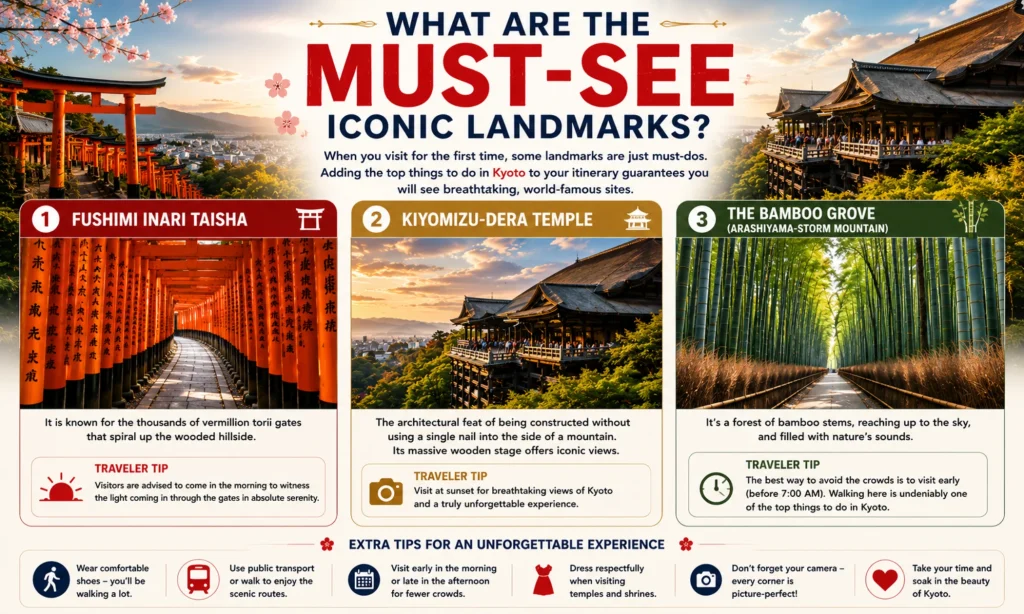
- Fushimi Inari Taisha: It is known for the thousands of vermillion torii gates that spiral up the wooded hillside. Visitors are advised to come in the morning to witness the light coming in through the gates in absolute serenity.
- Kiyomizu-dera Temple: The architectural feat of being constructed without using a single nail into the side of a mountain. Its massive wooden stage offers iconic views.
- The Bamboo Grove (Arashiyama-Storm Mountain): It’s a forest of bamboo stems, reaching up to the sky, and filled with nature’s sounds. The best way to avoid the crowds is to visit early (before 7:00 AM). Walking here is undeniably one of the top things to do in Kyoto.
What are some fun things to do in Kyoto?
Kyoto isn’t only about learning history; it’s about experiencing history. Here are some interactive activities that are definitely fun things to do in Kyoto, in addition to the temple hopping:
- Traditional Kimono Rental: This is the ideal way to experience the local atmosphere by enjoying a traditional kimono for a day. Many visitors enjoy walking the old streets of Sannenzaka or Gion (deeply historic districts) in traditional dress, which is suitable for incredible pictures and is easily one of the most Fun Things To Do In Kyoto
- Rickshaw Rides in Arashiyama: Take a tour with a local rickshaw puller! It’s not only a journey: the pullers are frequently quite energetic and know a lot of stories and local history that you won’t get in any guidebook.
- Japan’s Kyoto is famous for its tiny alleys full of food stalls: The Nishiki Market Food Hunt, known as Kyoto’s Kitchen. Play the guessing game: try at least three things that you haven’t heard of before, like takotamago (a quail egg in a baby octopus) or fresh, hot yuba (quail egg skin).
Read Also: – Top 10 Things to Do in Dallas During FIFA World Cup 2026
Kyoto’s best hidden gems
The secret to truly falling in love with Kyoto is learning to move one block away. The main masses focus on certain well-known coordinates, leaving the streets around them virtually deserted and thus well preserved. To discover the real Kyoto and experience unique things to do in Kyoto, go to these lesser-visited areas:
- Otagi Nenbutsu-ji: The temple is located in the hills of Arashiyama and contains 1,200 unique stone statues of Rakan (enlightened disciples of the historical Buddha), each made by a different craftsman in the whimsical style. Seeking this out is one of the more unique things to do in Kyoto
- Enko-ji: This temple is located in the north of Kyoto, with a beautiful garden that shifts in color from season to season, ideal for quiet contemplation.
- Ohara Village: A 60-minute bus journey from the city center, this rural farming village is an entirely different world, with the Sanzen-in temple and the renowned moss gardens.
- An alternative to nearby, busier Silver Pavilion, with a quiet, thatched-roof gate: Honen-in Temple. Adding hidden temples is vital when compiling a list of things to do in Kyoto.
Things to Do in Gion
Gion is the most popular district in the city, but many people only walk the main street and do not experience the real Gion. For the things to do in Gion, Kyoto, we recommend that one go down the smaller side streets from which the air boils with history:
- Explore the Shirakawa Canal: Lined with weeping willows and traditional tea houses, this is the most scenic part of the district and is perfect for a morning stroll.
- Tea House Experiences: Gion is the best place to find a traditional ochaya (tea house) to experience a formal tea ceremony.
- Evening Photography: The area after sunset is stunningly beautiful with the glow of paper lanterns. Always be respectful to the locals and avoid intrusive photos, making it one of the important things to do in Gion, Kyoto.
What is the best time to enjoy Kyoto at night?
As the sun dips below the horizon, the city transforms into a stunning and magical evening. The sunny day is gone, and restaurants hum with intimate sounds, while paper lanterns glow softly. When traveling to Kyoto, if you are looking for the best things to do in Kyoto at night and you are interested in it, you should begin here:
- Pontocho Alley Stroll: A stooped, lantern-lit alleyway that runs alongside the Kamo River. There are great bars, restaurants, and traditional tea houses there, ideal for a moody stroll at night.
- Yasaka Shrine Illumination: Unlike many temples, which are closed at dusk, this shrine is open and beautifully lit, creating a mystical atmosphere ideal for night photography, making it one of the most popular things to do in Kyoto at night.
- Riverside Dining: During the warmer months (May through September), many restaurants along the Kamo River set up kawayuka, outdoor wooden platforms built over the flowing water.
Things to Do in Kyoto with Kids
Kyoto is surprisingly kid-friendly. If your kids are getting bored of visiting one temple after another, you can switch to these interactive temples. These are some of the most engaging things to do in Kyoto with kids.
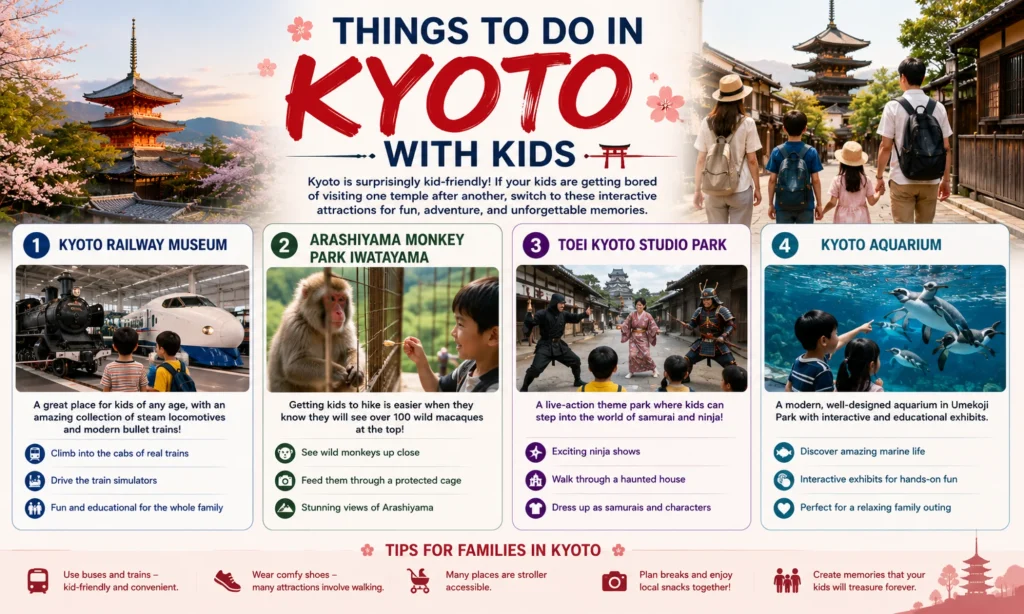
- Kyoto Railway Museum: This is a great place for kids of any age, with a really great collection of steam locomotives and modern bullet trains! Children can climb into the cabs and drive the simulators.
- Arashiyama Monkey Park Iwatayama: Getting kids to hike is easier when they know they will see over 100 wild macaques at the top. They can feed them through a protected cage, establishing it as one of the most memorable things to do in Kyoto at night.
- Toei Kyoto Studio Park: A live-action theme park where kids can watch ninja shows, walk through a haunted house, and even dress up as samurais.
- Kyoto Aquarium: A modern, well-designed facility situated in Umekoji Park with an interactive and educational environment where kids can observe marine life. These family experiences represent some of the most joyous things to do in Kyoto.
What are the local specialties?
The purity of ingredients is the key to the food culture of Kyōto. Kaiseki-ryori is the highest form of Japanese food and is a multi-course meal, with each dish symbolizing a season. If you’re in the mood for something less elaborate and just as elegant, you can’t go wrong with yudofu, a specialty of the Buddhist temples, where silken tofu is cooked in a light broth. Obanzai is Kyoto’s home-style cuisine, made up of numerous small, seasonal dishes of vegetables served family-style. A visit to Kyoto would not be complete without eating the street cuisine, such as takotamago (quail egg in a baby octopus) or fresh yuba (tofu skin) at Nishiki Market, Kyoto’s kitchen. Uncovering these flavors is an unforgettable addition to your list of things to do in Kyoto.
3-Day Kyoto Itinerary
If you’re feeling the squeeze, use this to take a look at the icons and balance the local soul:
Day 1: The Icons & History. Start at Fushimi Inari at dawn. Visit Kiyomizu-dera and Sannenzaka in the afternoon. After dinner, have a walk on the quiet side alleys of Gion, a historic area.
Day 2: Nature, Kids & Zen. Visit Arashiyama in the morning (Monkey Park and Bamboo Grove). Take some time to visit the Railway Museum or a temple, such as Enko-ji, in the afternoon.
Day 3: The Native Soul Head north to Ohara for a sample of village life. Head back to the city and treat yourself to a craft lesson or a tasty local lunch at a secret izakaya in the alleyways of Pontocho.
Read Also: – FIFA World Cup 2026 Mexico Itinerary
Conclusion
Kyoto is a really special place, where age-old customs mingle with contemporary life. Whether it’s the famed Fushimi Inari gates, a quiet hidden temple, or an alley illuminated with lanterns for a snack, this city has something for everyone. You can combine the more popular must-sees with the less dramatic, more quiet corners for a trip that is exciting and personal. In Best Things to Do in Kyoto: Cultural Experiences & Hidden Gems, the emphasis was placed on the importance of taking the time and taking a close look to fully enjoy this timeless and elegant city. We hope this guide helps you to discover the most amazing things to do in Kyoto on your next adventure.
FAQs
The things that you should not be missing in Kyoto are vermilion gates of Fushimi Inari, lantern-lit streets of Higashiyama and Gion, and the Golden Pavilion; you should also visit the Arashiyama Bamboo Grove.
For fun people rent traditional kimonos, and then they walk around and take pics in different regions of Sannenzaka or Gion.
Yes, you can walk around the lantern-lit Pontocho alley and visit the Yasaka shrine.
Yes, the place is mesmerizing, but make sure to be respectful towards the locals and avoid taking photographs without permission.
Otagi Nenbutsu-ji temple, which has 1,200 unique stone statues; the changing seasonal gardens of Enko ji, the farming village of Ohara; and the huge roof gate of Honen-in temple.
Read More: –